
Cities, Communities, Care: Youth in Action for Sustaining Peace
A three-day international event celebrating the 80th anniversary of the United Nations, exploring how cities and communities can foster global peace, with a strong emphasis on youth leadership.
11/23/20254 min read
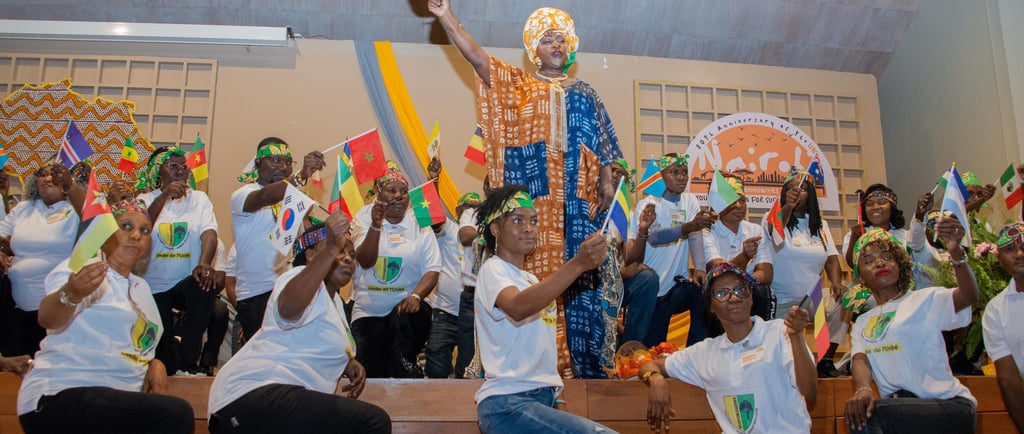
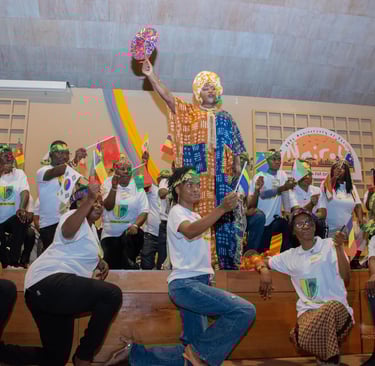
In the vibrant heart of Nairobi, Kenya, the international conference "Cities, Communities, Care: Youth in Action for Sustaining Peace" convened, marking the 80th anniversary of the United Nations. The city itself, one of the UN’s three main headquarters, became a living testament to Africa’s capacity for dialogue, transformation, and innovation. For over three days, young leaders, educators, and peacebuilders gathered to explore how cities, communities, and care integrate to sustain peace, transform neighbourhoods, and nurture human dignity.
The air was filled with a sensation of possibility. The conference was not just an event but a call to action, anchored in fraternity, care, co-responsibility, and reciprocity. These guiding principles framed the conversations: fraternity as the foundation for security and understanding, care as both a moral and practical imperative, co-responsibility as the engine of participatory change, and reciprocity as the key to connecting with others as “our other self,” echoing Chiara Lubich’s timeless inspiration.
Reflections on the UN at 80
Panellists offered a refined view of the United Nations, acknowledging its remarkable achievements while also facing its limitations. They celebrated the UN’s role in mediating conflicts, establishing human rights frameworks, and fostering international cooperation. Yet, they also noted that veto powers, unequal representation, and geopolitical stalemates threaten its credibility. The consensus was clear: the UN, like any human institution, is imperfect and requires renewal from the ground up, guided by civil society, youth, and moral courage, rather than only by national interests to replenish its soul duty.
International Connections: Stories of Cities and Communities
Throughout the conference, case studies from around the world brought theory into life. In Bethlehem, young people participated in Together We Connect, a Focolare initiative that utilised music, dance, and theatre to teach leadership, conflict resolution, and self-esteem. Small steps, panellists reminded the audience, often ripple into large-scale change.
Bethlehem (Holy Land) – International Connections | Nairobi 2025
In Manila, Architect Maria Cynthia Bank showcased integral ecology through the Estero Pavilion and adaptive structures in Novetta and Encantera. Here, architecture was more than buildings; it became a practice of care, a method to reconnect people with one another and with nature. Students, fisherfolk, and community leaders co-created these spaces, navigating the complexities of shared responsibility with patience and trust.
Manila (Philippines) – International Connections | Nairobi 2025
Trento, Italy, exemplified youth civic participation in action. Student councils and public forums allowed young citizens to influence city policies, from transportation to cultural programming. The city demonstrated that co-construction, not token representation, is essential to making youth voices meaningful and lasting.
Trento (Italy) – International Connections | Nairobi 2025
In Kinshasa, the Ecofor Leaders program empowered over 1,000 leaders in unity, integrity, and peace. Students marched for social cohesion, facilitated dialogues on collective memory, and trained women leaders to contribute to national reconstruction.
Kinshasa (Democratic Republic of the Congo) – International Connections | Nairobi 2025
Meanwhile, Medellín, Colombia, transformed its narrative from despair to hope through regenerative conversations, creative think tanks, and strategic social investment, illustrating that peace is built through collaboration, dialogue, and vision grounded in local realities.
Medellín (Colombia) – International Connections | Nairobi 2025
Together for a New Africa: Youth Ideas in Action
The T4NA International Call for Ideas brought the African continent’s young innovators to the forefront. Out of 28 submissions across 14 countries, six projects were selected for their creativity, feasibility, and potential impact. From employment initiatives in Angola to environmental restoration in Nigeria, each project demonstrated that youth-led peacebuilding is not an abstract ideal; it is tangible and actionable.
Interdisciplinary Dialogue: Youth, Peace, and Responsibility
On the final day, a rich interdisciplinary dialogue brought together experts from Brazil, the Philippines, Madagascar, and Nigeria. Professor Paulo Munis of Brazil reminded participants that youth are “co-authors of a more just and cooperative future”, capable of energising societies and reimagining multilateral action. Prisca Maharavo of Madagascar reflected on African values of Ubuntu and favana, emphasising that peace is a collective endeavour, requiring both the state and citizens to act in solidarity.
Professor Annet Balowing highlighted the Filipino experience, teaching that forgiveness and reciprocity render peace renewable, while trust and patient engagement rebuild broken social bonds. Lawyer Emmanuel Joker urged young people to confront injustice courageously, noting that inaction fuels inequity. Their words set the tone for a reflective “time out for peace”, inviting all participants to renew their personal commitment to unity and fraternity.
Global Connections, Local Impact
From Slovenia, the Together for Europe initiative demonstrated decades of interreligious collaboration. From Lebanon, the Made by Nature project illustrated how resilience and creativity can restore trust between rural and urban communities, blending family enterprises with SDG-aligned environmental action. Peace Together Uganda highlighted education, health, and women’s empowerment in post-conflict communities, reinforcing that local initiatives rooted in relationships can have a profound social impact.
Charter of Commitment: Pathways Forward
The conference concluded with the Charter of Commitment, outlining actionable pathways:
Youth Empowerment and Participation — prioritising leadership development and meaningful inclusion.
Peacebuilding and Conflict Resolution — promoting localised initiatives grounded in dialogue and culture.
Economic Empowerment and Innovation — equipping youth with entrepreneurial skills and sustainable opportunities.
Inclusive Urban Development (“Cities with Heart”) — designing spaces for community, art, sport, and creativity.
Participants pledged to become ambassadors of peace, to foster dialogue, to leverage art and culture for healing, and to practice solidarity and integrity, embracing a “positive Ubuntu” that encompasses all diversity, even those seen as adversaries.
A Transformative Encounter
In Nairobi, theory met practice, and dialogue became action. The conference illustrated that peace is not a distant goal but a daily commitment, cultivated through education, creativity, civic engagement, and care for one another. It reaffirmed the power of youth as creators, leaders, and catalysts for transformation, underscoring that the journey toward sustainable peace begins where we live, with the communities we nurture, and the values we uphold.
Connect with our projects
Project Office of the Focolare Movement in Eastern Africa
info@fonafrica.org
+254-768 671 396
© 2025 Project Office of the Focolare Movement in Eastern Africa - Focolare NewHumanity Africa. All rights reserved.
Mariapolis Piero, Kenyatta Road off Thika Highway Exit 14
P.O. Box 552 - 01001 Kalimoni Juja
Our Affiliations
New Humanity of the Focolare Movement
Focolare Movement (International Website)
Legal: Privacy Policy | Terms & Conditions